
 Before this program, social justice was a deep feeling and something I practiced imperfectly. The program guided me to better understand it as practice, not position and that it requires structural analysis, historical accountability, and relational humility.
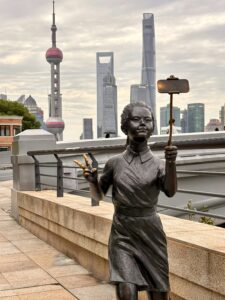
One text that grounded this understanding is Factory Girls. In a single line, Leslie T. Chang captures how global systems land on individual bodies:
“Every shoe has a label on its tongue: MADE IN CHINA” (Chang, 2008, p. 99).
Policy can drift into abstraction but people do not live in abstractions, we all live in systems that shape our world and those systems show up in the everyday.
This program strengthened both my toolbox and my commitment to how I use it to serve going forward. In my current role, that means building relational consultation processes that respect rights and title, protect dignity, and produce decisions that withstand ethical, not only legal scrutiny. I pay attention to process as a form of respect as a way to navigate who holds the authority, what is being extracted, and what is returned to community. I ask whether consultation is meaningful and whether accommodations reflect the rights being raised. These questions determine whether institutions move toward justice or repeat harming while using more sophisticated language.
Social Justice Has a History — and That History Is Present
The most foundational shift in my learning was temporal: injustice is not a contemporary failure but a structural inheritance. Systems producing harm today were deliberately designed and historically embedded.
HRSJ 5010 provided the scaffolding for this shift such as the frameworks of intersectionality, critical race theory, distributive justice, feminist analysis, and anti-colonial perspectives gave me language for patterns I had observed across two decades of work but could not previously name with precision.
HRSJ 5230 deepened this understanding. Reading Rana Dasgupta alongside Utsa Patnaik revealed the continuity beneath contemporary inequality. Dasgupta argues that eighteenth-century British elites “could not afford democracy” because their wealth came from overseas monopolies, independent of domestic participation. That logic persists: as economies become transnational and financialized, the conditions that once made democratic participation necessary are dissolving.
“The most significant processes of our own moment is the re-exclusion of the Western masses from the centre of world affairs — a position they occupied for less than two centuries” (Dasgupta, 2020, p. 47).
When Donald Trump invoked a returning of the “Golden Age” during the 2024 campaign. In a 2016 editorial for Harper, referenced by Rana Dasgupta, Peter Thiel argued that freedom and democracy are no longer compatible (Dasgupta, 2020, p. 55). Recognizing and interpreting this kind of structural intent in political rhetoric is a concrete outcome of social justice education. It is not enough to feel alarm; you need the analytical tools to understand the full scope and weight for what you are witnessing. This is deeply unsettling, as it points toward a concentration of power in oligarchic structures driven by capitalism, while framing collective “socialism” protections as a threat.

(Photo credit Carol Guzy, 2025) “Separated by ICE”
This image capture by Carol Guzy called “Separated by ICE” shot in 2025 for the Miami Herald on August 26, 2025, won the 2026 World Press Photo of the Year. The image shows Luis, an Ecuadorian migrant with no criminal record, being detained by ICE agents after an immigration hearing as his wife and three children look on.
This framing also reshaped how I understand Indigenous dispossession in British Columbia. Studying the Bush Fire Act of 1874 and the Fulton Commission 1910 revealed more as they are not policy failures but instruments used as colonial land seizure tools. Environmental and governance issues are not separate, and so intertwined as they are part of the continuous story about whose knowledge counts, whose authority is recognized, and who bears the cost.
Injustice Is Structural, Not Incidental — and So Must Be the Response
A key shift was moving from seeing injustice as isolated incidents to understanding it as a structural condition reproduced through institutions.
My HRSJ 5030 grant proposal, The Race for Innocence, examined how BC post-secondary institutions adopt the language of decolonization—land acknowledgments, UNDRIP commitments, TRC references—while structural relationships remain unchanged. The program gave me the tools to analyze what I had already experienced professionally.
The distinction is between performative and structural reconciliation. Performative reconciliation adopts Indigenous language while retaining colonial authority. Structural reconciliation requires redistributing decision-making power and implementing frameworks like the United Nations Declaration on the Rights of Indigenous Peoples and Declaration on the Rights of Indigenous Peoples Act. The difference is not rhetorical—it is about who governs.
This carries directly into my work as a First Nations Relations Advisor. Consultation is not a procedural requirement; it is a test of whether authority is genuinely shared or merely appears to be.
Knowledge Is Never Neutral — and Neither Is Research
HRSJ 5030 transformed how I understand research. It is not a neutral process but a political act. Methodological choices—whose knowledge is centred, whose is excluded, and who benefits—have structural consequences.
Engaging with Indigenous and Global South scholarship challenged the idea of “objectivity” as neutral. What is presented as objective often reflects institutional power. Social justice requires not only different answers but different questions—developed in relationship with the communities affected.
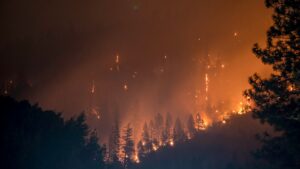 This became clear in my HRSJ 5250 research on BC’s wildfire crisis. The concept of “situated resilience” shows what is lost when Indigenous knowledge is extracted from its governing context: relationships, accountability, and meaning. Western fire science can adopt techniques while stripping governance, resulting in what scholars describe as “further colonialism.”
“Knowledge is fundamentally changed if it is viewed solely as content and extracted from the broader social, cultural, and political contexts within which it sits.” (Copes-Gerbitz et al., 2021, p. 2).
The 2023 BC wildfire season saw 2.8 million hectares burned, 48,000 people displaced, over one billion dollars in suppression costs and in my eyes was not a natural disaster. It was the predictable outcome of colonial fire suppression policies that criminalized Indigenous stewardship and excluded Indigenous governance. The Bush Fire Act of 1874 was not a safety measure; it was designed to protect resource extraction.
Witnessing Is an Ethical Act — and Demands a Response
HRSJ 5220 asked: what does it mean to truly witness harm? Kelly Oliver frames witnessing as “response-ability”—an ethical obligation to act. Witnessing is not passive; it implicates you.
 My final paper examined the Secwepémc Museum and Heritage Park and the Australian Museum exhibit Unsettle. Visiting the former Kamloops Indian Residential School and hearing testimony grounded in Secwepémc protocol was an ethical encounter that demanded response.
These sites transform visitors into witnesses through design: embodied space, first-person voice, protocol, and clear action pathways. Michalis Zembylas warns that human rights education can produce “cheap sentimental” responses unless emotion leads to action. These spaces resist that. They do not allow visitors to feel and move on—they require understanding and accountability.
This shapes my consultation practice. Receiving testimony creates obligation. The response must match what was given.
Sovereignty Is Not a Metaphor — and Decolonization Cannot Be One Either
Across the program, one conclusion became clear: social justice for Indigenous peoples is inseparable from sovereignty. Eve Tuck and K. Wayne Yang argue that decolonization “is not a metaphor.” It cannot be reduced to equity initiatives or symbolic gestures.
“Decolonization is not obliged to answer those questions — decolonization is not accountable to settlers, or to settler futurity.” (Tuck and Yang, 2012, p. 35).
Verna Kirkness and Ray Barnhardt offer the Four Rs—Respect, Relevance, Reciprocity, Responsibility—as a framework for evaluating whether commitments are real or performative.
International examples reinforce this: the Whanganui River and the Kungun Ngarrindjeri Yunnan Agreement show that when sovereignty is recognized and resourced, more equitable outcomes follow. Social justice requires structural transformation—and actual transfer of authority.
Social Justice Is Practice — Not Position
If one sentence captures this program, it is this, social justice is not a belief but a daily, structural, relational practice. It is something I entered due to my age, experience and commitment but lacked the analytical rigor to explain “why” systems reproduce inequality. The program provided that clarity.
It gave me the ability to recognize colonial logic in political rhetoric, to understand witnessing as ethical obligation, and to challenge performative reconciliation with structural analysis. It shaped how I work at the intersection of Crown authority and First Nations rights and title, with rigor and accountability. Human rights begins in the everyday for how we listen, show up, and share our power. Process matters because it is a form of respect, which is built into the design of the work itself that I do.
I am grateful for the discomfort this program demanded. Each difficult idea held transformative power and I am so grateful to have faced each as I am transformed. As the matriarch of my family to how I carry it into every consultation, relationship, and decision – it asks me to choose between what is convenient and fair.
Sources
Chang, L. T. (2008). Factory girls: Voices from the heart of modern China. Spiegel & Grau. https://books.google.com/books/about/Factory_Girls.html?id=rnIgAQAAMAAJ
Copes-Gerbitz, K., Hagerman, S. M., & Daniels, L. D. (2021). Situating Indigenous knowledge for resilience in fire-dependent social-ecological systems. Ecology and Society, 26(4), Article 25.
Daniels, L. D., Dickson-Hoyle, S., Baron, J. N., Copes-Gerbitz, K., Flannigan, M. D., Castellanos-Acuna, D., Hoffman, K. M., Bourbonnais, M., Wilkinson, S. L., Roeser, D., Harvey, J. E., Laflamme, J., Tiribelli, F., Whitehead, J., Leverkus, S. E. R., & Gray, R. W. (2025). The 2023 wildfires in British Columbia, Canada: Impacts, drivers, and transformations to coexist with wildfire. Canadian Journal of Forest Research, 55(1), 1–18. https://doi.org/10.1139/cjfr-2024-0092
Dasgupta, R. (2020, December). The silenced majority: Can America still afford democracy? Harper’s Magazine, 47–56.
Kirkness, V. J., & Barnhardt, R. (1991). First Nations and higher education: The Four R’s — Respect, relevance, reciprocity, responsibility. Journal of American Indian Education, 30(3), 1–15. https://www.jstor.org/stable/24397980
Oliver, K. (2015). Witnessing, recognition, and response ethics. Philosophy & Rhetoric, 48(4), 473–493. https://doi.org/10.5325/philrhet.48.4.0473
Sloan Morgan, O., & Burr, J. (2024). The political ecologies of fire: Recasting fire geographies in British Columbia, Canada. Environment and Planning E: Nature and Space, 7(4), 1918–1934. https://doi.org/10.1177/25148486241235836
Tuck, E., & Yang, K. W. (2012). Decolonization is not a metaphor. Decolonization: Indigeneity, Education & Society, 1(1), 1–40. https://jps.library.utoronto.ca/index.php/des/article/view/18630
Zembylas, M. (2017). Cultivating critical sentimental education in human rights education. International Journal of Human Rights Education, 1(1), 1–26. https://repository.usfca.edu/ijhre/vol1/iss1/3/