
There is a moment in learning when language arrives and something clicks. That for me, was when I could finally give that feeling a name. Rana Dasgupta helped me connect political life to economic structure. Utsa Patnaik and Prabhat Patnaik showed how policy is constrained by economic narratives are treated as inevitable. Sharon Chasi and Savo Heleta connected sustainability to justice, not just as an add-on, but as a responsibility.
Eve Tuck and K. Wayne Yang kept me honest about what it means when institutions use decolonizing language and performance without changing what matters. Their warning is blunt:
“When metaphor invades decolonization, it kills the very possibility of decolonization” (Tuck & Yang, 2012, p. 3).
That line pushed me to ask whether the work in front of me shifts power and authority, or simply changes wording. This program gave me that “click” more than once. It provided frameworks to name structural harm not as isolated incidents, but as organized systems with histories, logics, and consequences.
One of the clearest shifts was learning to interpret contemporary political rhetoric for example when public language signals deeper structural intents, especially around participation, belonging, and authority – this clarity for me matters. It turns my fear into grounded analysis and makes action possible – where I can now really voice my dis-ease.
I also came to understand that human rights work depends on governance for who holds the authority, whose knowledge counts, and whether processes share power or just manage it. This is now central to how I approach consultation.
When the Language Clicks
That moment of clarity intensified during HRSJ 5230 when reading Rana Dasgupta’s ‘The Silenced Majority’ alongside Utsa Patnaik’s work revealed how the structural logic of property and capital produces systems of exclusion we often mistake as separate issues – my mind was blown. 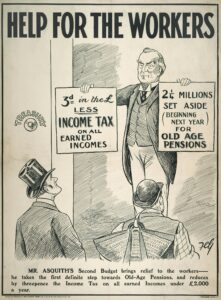
Revisiting these texts through 2024 and into 2025, I watched the U.S. presidential election unfold. When Donald Trump invoked a returning “Golden Age” and “manifest destiny,” in his speech I did not just feel alarm, I recognized the structure behind the language and held fear for family and friends throughout the US. Dasgupta’s argument had already named it: the postwar period of high wages, broad suffrage, and welfare states was a brief historical interregnum where labour temporarily disrupted the dominance of property. The language of “restoration” signals a reassertion of that dominance.
Hearing this in real time and realizing how few people around me had the framework to interpret it was extremely unsettling to me – so much so, I became very vocal. This program gave that to me: a framework and confidence to speak up and the difference is not between fear and calm, but between fear and clarity and speaking my learned truth.
Naming the Depth of Cruelty
Before this program, I knew the world was unjust, as I had experienced it myself through lateral violence and power imbalances. But understanding injustice as lived experience is different from understanding it as a structural, formal historical system. This program changed that distance.
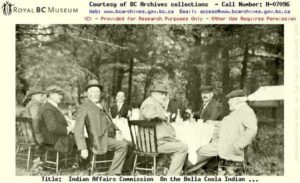 Photo credit BC Archives _ Royal BC Museum. Indian Affairs Commission.[/caption]
Dasgupta’s account of how elites “could not afford democracy” and “did not need it” named something I had long sensed: large-scale cruelty is not irrational . but rather it is organized. The enclosure acts, the criminalization of Indigenous fire stewardship, the exclusion of Indigenous women from the Fulton Commission 1910, and the treatment of residential school harms as historical rather than ongoing are not failures. They are features of a system organized around property.
Reading Patnaik alongside Dasgupta connected what once felt like separate issues such as BC wildfires, residential schools, performative decolonization, and the American election. They reflect the same logic that who holds property, whose knowledge counts, and who is structurally excluded from decisions that shape their lives.
Human Rights as a Counter-Language
HRSJ 5010 provided the counter-language. Frameworks such as intersectionality, critical race theory, feminist analysis, and anti-colonial perspectives are not abstractions—they are tools for naming harm and the authority behind it.
This reshaped how I understood my work in post-secondary institutions. My HRSJ 5030 grant proposal examined how institutions adopt the language of decolonization—land acknowledgements, UNDRIP, TRC Calls to Action—while maintaining colonial power structures. The question became clear: what distinguishes language from action? The answer is governance and who holds the authority.
Verna Kirkness and Ray Barnhardt’s Four Rs—Respect, Relevance, Reciprocity, Responsibility—provided a framework to assess this. Tuck and Yang grounded it in accountability. Work like “situated resilience” further clarified what is lost when Indigenous knowledge is extracted without transferring governance: context, relationship, and meaning. Extracting knowledge while retaining colonial authority is not collaboration—it is colonialism repackaged.
The Fear I Felt for Those Further South
The 2024 U.S. election was not distant for me. Living in Kamloops, working in a province intertwined with the United States, I watched with a level of understanding I did not have two years earlier.
Dasgupta argues that the threat to democracy is not a return to overt fascism, but a quieter erosion—where democratic participation becomes inconsequential under concentrated economic power. When Trump spoke of a “Golden Age,” I heard not nostalgia, but a structural program: the reassertion of property over labour and the transformation of democratic systems into instruments of managed consent.
This is not isolated. The same logic appears in BC’s wildfire crisis, in colonial land governance, and in ongoing inequities tied to residential schools. The suppression of democracy is not new—it is the default condition of systems organized around property when challenged by people. This realization frightened me. It still does. But named clearly, it becomes something I can navigate.
From Comprehension to Vocation
What I carry forward into my role as a First Nations Relations Advisor with the Ministry of Forests is not just knowledge, but a way of seeing—analytical and relational, grounded in both theory and lived experience.
The work of human rights is not better documents or more meetings. It is asking, at every stage: who holds authority? Whose knowledge is being used, and is governance transferred with it? Who benefits?
These questions come from across this program—from foundational theory, research methods, trauma-informed witnessing, and environmental justice. They converge in a single understanding: structural inequality is not accidental. It is produced.
I began this program uncertain I belonged. I leave with a different kind of uncertainty—one grounded in knowing how much more there is to understand. I am no longer intimidated by complexity. I am equipped for it.
Closing: The World as It Is, and What We Owe It
When I read Dasgupta’s argument, it highlighted that the real political struggle is between people and a system capable of eroding democratic life and my heart breaks for those who are living through it – these are the truest form of lived examples of resistance and governance. 
I think of the Kamloops Indian Residential School site, where Secwepémc protocols guide visitors through ethical witnessing. I think of Indigenous-led exhibitions and communities practicing fire stewardship as responsibility, not policy. I think of what Tuck and Yang mean when they say decolonization has no synonym.
These are not soft counterpoints, but they are assertions of people navigating the basis of governance, knowledge, and belonging – fight against systems organized around property. They are human rights in practice.
I entered this program unsure I deserved to be here – as an imposter! I leave recognizing that doubt strongly tied to and a part of the systems I was studying. I am doing the work and will continue to do the work. I see more clearly and speak with more precision. I am ready for what comes next.
Sources
Chasi, S., & Heleta, S. (2023). Towards more sustainable, equitable and just internationalisation practices: The case of internationalisation conferences. Journal of Studies in International Education, 27(4), 603–620. https://doi.org/10.1177/10283153221139924
Dasgupta, R. (2020, December). The silenced majority: Can America still afford democracy? Harper’s Magazine. https://harpers.org/archive/2020/12/the-silenced-majority/
Patnaik, U., & Patnaik, P. (2019). Neoliberal capitalism at a dead end. Monthly Review, 71(3), 20–31. https://doi.org/10.14452/MR-071-03-2019-07_2
Tuck, E., & Yang, K. W. (2012). Decolonization is not a metaphor. Decolonization: Indigeneity, Education & Society, 1(1), 1–40.