

Welcome to my e-portfolio. What you will find within is more than a final assignment. It is a reflection of the learning, work, and the journey that brought me to the completion of my Master of Arts in Human Rights and Social Justice, and to a clearer sense of who I am within this field.

A dear friend recently offered me a simple gift, the reminder to slow down and name what is true. So let me begin there: I have a good life, and it has been a meaningful road and for far too many years I have looked backwards or raced ahead, measuring myself against what I had not yet become or tackled. Never fully being present in the here and now. This program taught me to honour where I have been and where I am going, while remaining fully present in the life I am actually living. I am proud of that road, and I am ready for what is next.
“The more uncomfortable it is to face it, the more power it has to transform you.”
— Mel Robbins
My arrival to this program was not comfortable as I had spent recent years advocating for people and programs inside an institution that taught me something those same institutions rarely advertised: the work costs more than the job description details. I learned to sustain effort having been managed by leaders whose public warmth was rehearsed, without waiting for it to be reciprocated. Looking back, those years were the lesson. Every resistance I experience was a lesson teaching me something textbooks could not, how to tell the difference between one worth fighting to change and one that has already made its decision. That wisdom didn’t cost me but rather, it helped evolve me.
Doubt played a role as well. Impostor syndrome didn’t hover in the background, it moved right in, which I let it. Then, I stopped mistaking its noise for fact and what I found underneath was a quiet confidence starting to settle in.


During these years I lost my father to cancer. Six months later, my mother died unexpectedly. I returned to Kamloops not as a daughter seeking comfort, but as the matriarch holding my family together. Graduate coursework, a late career transition, and grief arrived together. None of it came in sequence or with grace, but I kept going because I believed then, as I believe now, that process is a form of healing.

None of it arrived in sequence or with grace which this program helped me name what the difference between symbolic comfort and real change. One line has stuck with me throughout and incorporated into a number of papers is this: “Decolonization doesn’t have a synonym” (Tuck & Yang, 2012, p. 3). This sentence has kept me honest and reminds me that language alone cannot do the work – that responsibility shows up most clearly in how we design processes, how we share power, and how we act when it is hard. I believe now, that process itself is a form of healing.
Mel Robbins is right – the more uncomfortable something is to face, the more power it holds to transform. Grief is no different (respectfully, my opinion) when you let it do its full work, it doesn’t only take but it actually strips away what was never really yours to carry in the first place. That’s what happened with my doubt. I stopped fighting it and let it slip off into the ether, and what I found on the other side wasn’t nothingness, but actually, it was peace – calmness. The impostor syndrome didn’t just quiet down, it dissolved – I stopped feeding it with avoidance and from a place of fear.
The years spent advocating inside an institutions that didn’t always extend the same care back, well that exhaustion was real. But more importantly, so was what it taught me. You learn things about your own threshold, discernment, resource capacity, and leveraging your voice, that the comfort (and easy way) never could have shown you. The difficulty wasn’t incidental to my growth, but actually it was the growth – the pathway I needed.

“Growing as a professional is only part of the story. Growing as a person, as a partner, a stepmother, a sister, a friend, and colleague is the part that matters more.”
J. Karie Russell
Today I am a First Nations Relations Advisor with the BC Ministry of Forests. I work where policy meets people: leading culturally safe and trauma aware events, coordinating consultation, assessing potential impacts to rights and title, and recommending accommodations that genuinely recognize First Nations interests rather than performing reconciliation.
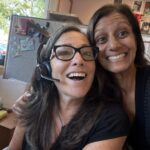
What strikes me most about this work, is it draws on everything I have achieved across all careers, educational and relational landscapes. Each skill developed finds its place across all spaces I now engage, woven into my daily work, collegial relationships, and the communities we serve. Human rights begins in the everyday with how we listen, how we show up, and how we share power.
Sources
Tuck, E., & Yang, K. W. (2012). Decolonization is not a metaphor. Decolonization: Indigeneity, Education & Society, 1(1), 1–40